Miseria Party and Characters
Unlock order, roles, and how each ally changes your descent strategy.
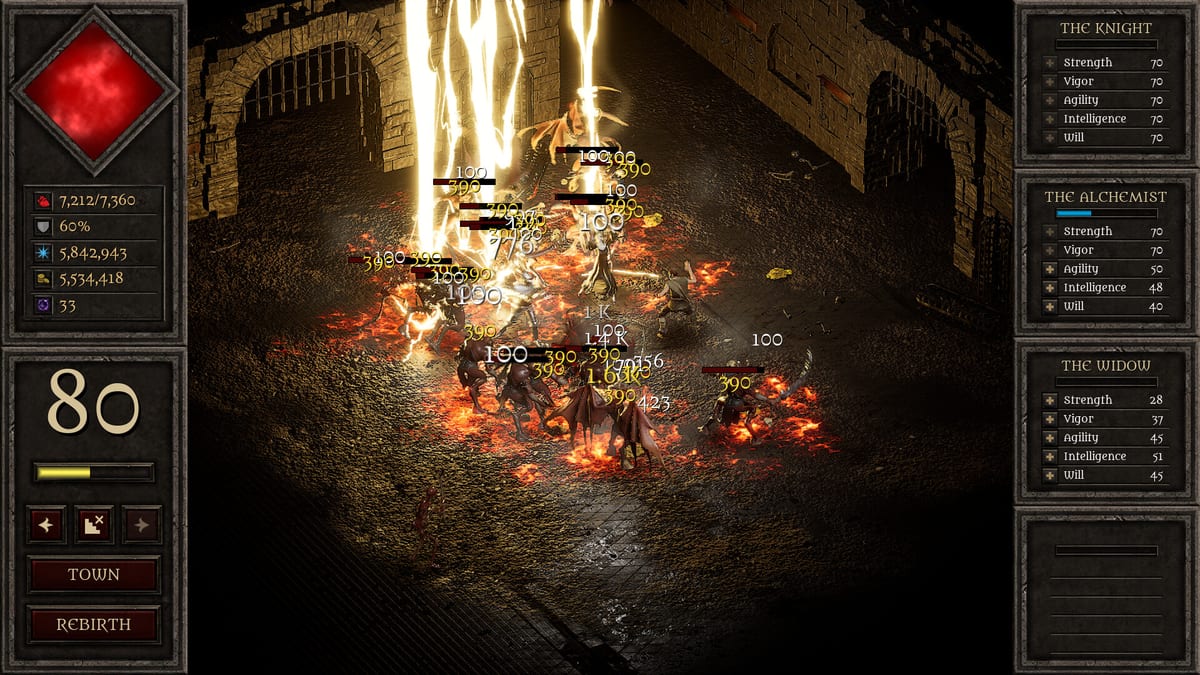
Miseria is a party-based idle RPG even when you begin alone. Your first hours are a Knight story; your later hours are a roster story. Understanding unlock timing—especially the Alchemist through the Strange Plant—and how new slots change stat and Church priorities will save more progress than any single sword upgrade. Use this page with Stats Explained and the character tier list.
Starting roster: the Knight
You begin with the Knight, a straightforward frontliner built to teach the loop: auto-attack, earn gold, visit the blacksmith, level Strength and Vigor, descend. The Knight remains useful even after the party grows because reliable physical damage and a sturdy body make Church thorns/spikes shine. Early build details live in Early Game Build; do not abandon the Knight the moment a second face appears.
Treat the Knight as your default carry until a specialist clearly out-scales a given floor. Keep weapon and armor upgrades current. If the Knight dies, the run’s tempo collapses—idle progress needs a living tank more than a fancy backliner who never gets to act.
Unlocking the Alchemist (Strange Plant)
The Alchemist joins through the Strange Plant path—an exploration/unlock beat rather than a simple shop purchase. Once available, the Alchemist shifts the party toward Intelligence-linked skills, utility, and damage patterns that are not pure sword swings. That unlock is one of the first true build forks in Miseria: you stop thinking in one character sheet and start thinking in roles.
After the Alchemist arrives:
- Keep the Knight on Strength / Agility / Vigor.
- Stack Intelligence on the Alchemist with enough Vigor to survive.
- Spend gold on the forge for both kits using Upgrade Priority instead of maxing one hero and starving the other.
- Revisit Church nodes that buff skills, mana flow, or party-wide defense—see the Church upgrades tier list.
Later party slots
More slots open as you push deeper and complete progression gates. Each new seat multiplies both power and gold pressure: more bodies to gear, more XP to distribute, more ways to specialize. Resist the urge to unlock-and-ignore. A third member with zero forge attention is a liability that dilutes loot.
When a new slot opens, pause the descent plan for one session:
- Identify the new character’s primary scaling (Stats Explained).
- Assign a role: carry, chip/thorns partner, skill burst, or utility.
- Rebalance blacksmith spend so the new member reaches “online” status.
- Check whether a Reborn is smarter than forcing a weak roster deeper.
Party synergy with Church and Reborn
Temporary party power resets with Reborn; permanent Church power does not. That means roster identity should inform blessing spend. If thorns are carrying your clear, buy the spikes line and survivability that keep multiple bodies in melee. If the Alchemist’s skills delete elites, buy the permanent nodes that raise skill efficacy and economy so you can afford their reagents-in-spirit: gear and levels.
Floor 19 is a narrative milestone many players treat as a roster checkpoint—arrive with at least your core duo geared, blessings spent, and a plan from Mid Game Build. Single-player only: there is no multiplayer partner to fill a missing role, so your unlock order is your difficulty curve.
Practical party checklist
- Knight always has a survivability floor (Vigor + armor).
- Alchemist is not a second Knight; stack Intelligence intentionally.
- Magnet / auto-gold Church QOL becomes more valuable as party size grows—more kills, more loot to vacuum.
- Prefer one strong, fully upgraded pair over three half-built souls.
- After each Reborn, re-equip and re-level with the same role plan; do not reinvent the party every cycle unless a new unlock forces it.
- Use the Reborn planner when you are unsure whether to push for another character gate or cash in blessings.
Linking builds to characters
Early game is Knight-centric. Mid game is Knight + Alchemist with Church thorns and economy online. Later game is full-slot specialization guided by the character tier list and Builds Hub. If you are still learning the UI and first unlocks, skim Getting Started before optimizing spreadsheets in your head.
Party management in Miseria is quiet work: the game fights for you, but you decide who is allowed to exist in the dark—and whether they are fed enough gold to matter.
Frequently Asked Questions
Quick answers to the most common questions.
Who do I start with in Miseria?
You start with the Knight. Focus on Strength, Vigor, and blacksmith gear until the Alchemist unlock appears.
How do I unlock the Alchemist?
Progress the Strange Plant unlock path. Once recruited, specialize them into Intelligence instead of cloning the Knight’s stats.
When do more party slots open?
Additional slots unlock later through descent and progression gates. Gear each new member promptly or your gold efficiency collapses.
Should I Reborn before unlocking new characters?
If you are soft-locked and blessings would buy Church power that speeds the unlock, Reborn. If the unlock is close and affordable, finish it first.
Does party composition matter for thorns builds?
Yes. Thorns need living frontliners. Keep Vigor high on whoever stands in contact range so Church spikes keep dealing damage.
Is Miseria multiplayer for party play?
No. Miseria is single-player only. Your entire roster is local—plan unlocks and gear without assuming a second human.